
You can also read this on Healthyandwholeyou.com
What's in store for today:
- Finally...the truth about diet soda is out 🥤
- The Perfect Fall Chili Recipe For Fat Loss
- 5 Things To Track For Overall Health
Hey friend,
I don't know if you need to hear it or not, but just remember that one of the gifts of being human is that no matter how many times we mess up...
No matter how many decisions we make that weren't the right ones...
No matter how far we fall at times from where or who we want to be...
We can always make a change.
We can always change direction.
We can always level up.
The catch...is that no one is going to do it for you.
So when you find yourself struggling just acknowledge reality, take full ownership (that's your power), and start climbing.
The good news is if you do it right you'll come out stronger and wiser than before, which means the pain was worth it.
Now, let's get into this week's Practical Health Journal...
Finally, The Truth About Diet Soda
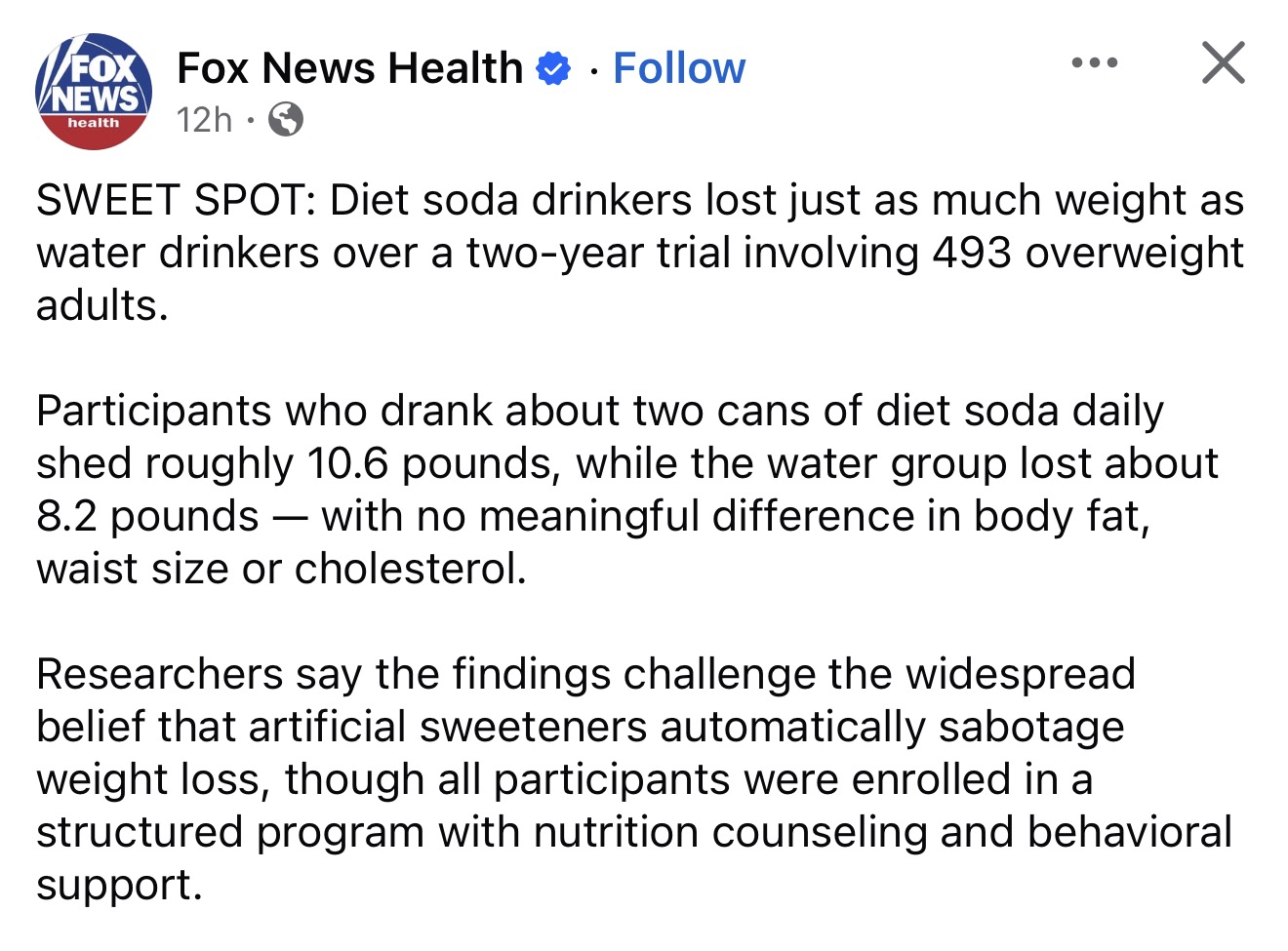
I was scrolling Facebook when this article popped up about a new study on artificially sweetened soda — and it’s making a lot of headlines right now.
Turns out...it’s not the devil it was made out to be after all 👺
The study found that zero sugar soda didn’t just fail to cause weight gain — the people drinking it actually lost more weight than the water-only control group. 🤔
Honestly, I’m stoked to see the science catching up here.
For years diet soda got villainized with claims that it made people hungrier, caused them to eat more overall, and raised cancer risk. But when researchers actually test these claims in controlled trials — the kind that can show cause and effect — the results keep going the other direction.
The scary cancer headlines came from limited, low-confidence evidence, and the FDA publicly disagreed with that classification.
Meanwhile, people have been quietly using diet soda as a genuinely helpful tool for squashing cravings, eating less, and losing weight more effectively.
The outrage made for great headlines. The science just never backed it up.
So go ahead and enjoy your Diet Pepsi.
Because let’s face it, Diet Coke tastes like garbage 😂😉
Don’t hate me :)
The Perfect Fall Chili Recipe For Fat Loss
With Fall quickly approaching it's the perfect time to share this amazing chili recipe.
It's low calorie, high protein, and you can make this chili WITH noodles as the recipe states below, or if you are one of "those" people, you can make it without noodles and it will be even lower in calories per serving 😂
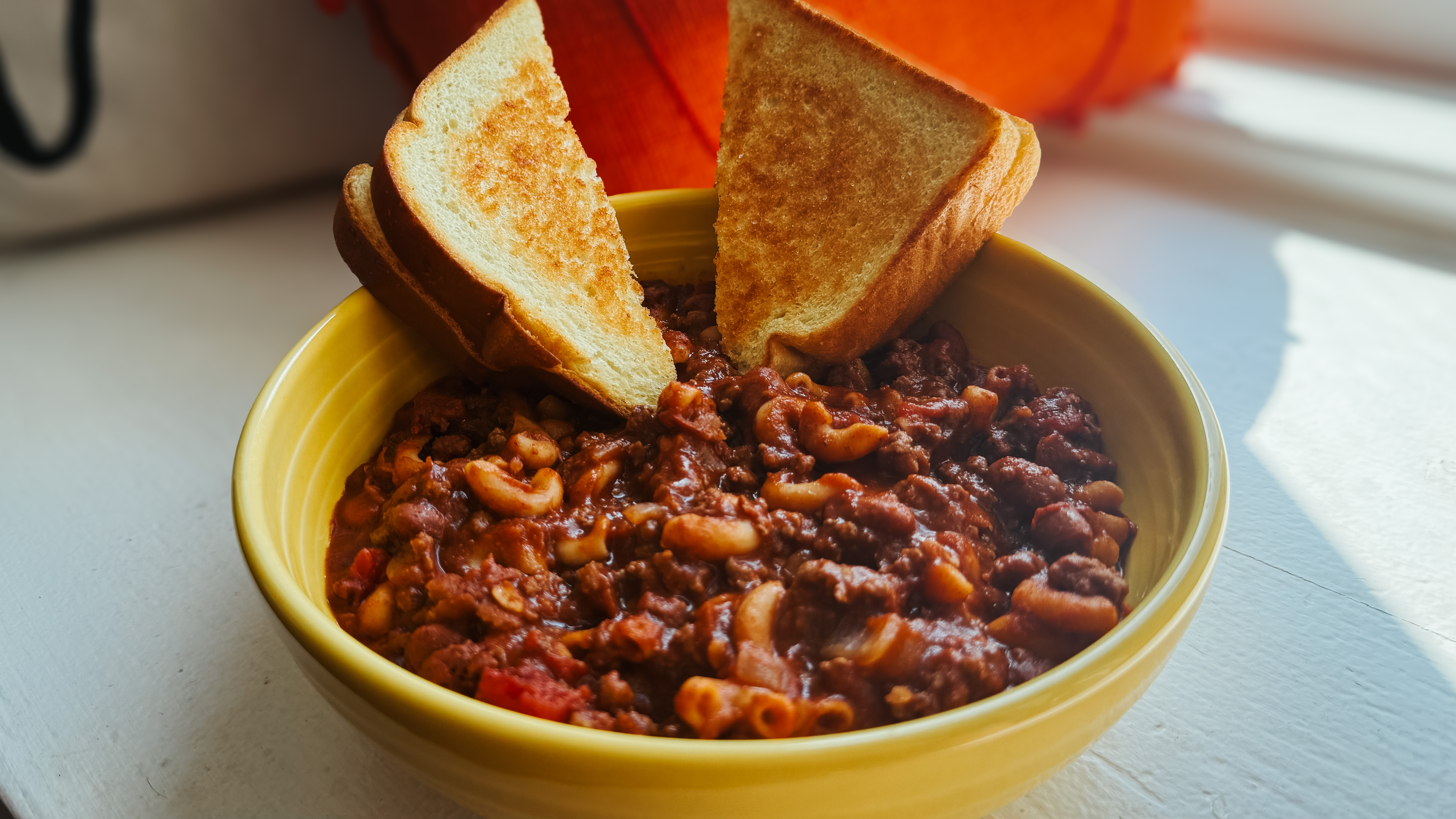
Matt's Famous Guilt Free Chili Recipe
Bulk Serving Recipe Makes 8 - 1 Cup Servings:
- 254 Calories (Chili only, see below for topping recommendations)
- 45% Protein
- Only 38% Carbohydrate
- 26 Grams Protein
- 22 Grams Net Carbohydrate
-1.5 Pounds 96% Extra Lean Ground Beef
- 3 Cups Tomato Sauce
- 1 14.5 Oz. Can of Diced Tomatoes
- 1 15.5 Oz. Can of Chili Beans
- 1 Onion Chopped
- 1 Packet of Chili Seasoning
- 1/2 Box Banza Chickpea Elbow Pasta (4 Oz. Dry)
- Put your 4 oz. of Banza Chickpea Elbow pasta into a pot with water and boil until fully cooked (per instructions on the box). While boiling move to step 2.
- In a large soup pot, spray the bottom of the pot lightly with cooking spray, then add the 96% Extra Lean Ground Beef and the chopped onion to the bottom of the pot and start to brown the meat and the onions together on medium to medium high heat.
- Once the ground beef and onion is browned and fully cooked add in the tomato sauce, diced tomatoes, chili beans, chili seasoning, and fully cooked chickpea pasta. Then cover and let simmer until warm and ready to eat.
5 Things To Track If You Want To Live
A Long, Strong, Lean, And Healthy Life
You can’t manage what you don’t measure.
I’m not saying you need to become obsessive about data. But there are five things worth keeping an eye on — and each one tells you something different about whether the life you’re building is actually adding healthy years or slowly taking them away.
Here’s what I track, why it matters, and the ranges to aim for.
Quick note before we dive in: I’m a coach, not a doctor. Everything below is general education based on published reference ranges — not medical advice. Your own targets may be different depending on your health history, and your bloodwork should always be interpreted with your physician.
1️⃣ Your Daily Scale Weight
If you don’t track it, you don’t control it.
Weighing daily is like driving with your eyes open. You see where you’re headed, and you catch the caution lights before they turn into stop signs.
For the vast majority of people, staying within a healthy BMI range is a great goal. BMI isn’t perfect — it can’t tell the difference between muscle and fat, so a small percentage of people who carry a lot of muscle might be perfectly healthy while technically sitting in the “overweight” category. But for most of us, healthy BMI is a reasonable target.
The other benefit of daily weighing: you learn how your body actually fluctuates. Once you see those swings for what they are, the scale stops having power over your mood.
One honest caveat: daily weighing isn’t right for everyone. If stepping on the scale sends you into a spiral, or if you have any history of disordered eating, weighing weekly — or skipping the scale entirely and tracking other markers instead — is a completely valid approach. The tool should serve you, not the other way around.
Easiest way to do it: a WiFi scale like the Withings Body Smart Scale. Stand on it for 10-20 seconds each morning and it logs your weight, body fat %, and BMI to an app automatically. No thinking required.
2️⃣ Your Daily Steps
Walking makes up a huge chunk of your daily calorie burn — and it’s the single most underrated longevity habit there is.
8,000-10,000 steps a day is the sweet spot for health and weight control. But if you’re not tracking, you have no idea where you’re landing, and consistency is impossible.
A wrist tracker (Fitbit, Apple Watch, Garmin) is a worthwhile investment. It makes steps effortless to monitor — and it tracks the next metric on this list too.
3️⃣ Your Strength Workouts
Not just how many workouts you’re doing. 3 strength sessions a week at 30-45 minutes is ideal — but what matters just as much is tracking your actual reps and weights.
That’s progressive overload: gradually increasing the weight you lift over time as you get stronger.
Strength training without progression means you’re getting maybe half the benefit and leaving a lot on the table — for longevity, for function, and for how you look.
So get a structured program, log every set in a fitness app, and work to beat your previous bests. Done right, this doesn’t just slow the muscle loss that comes with aging. It means you actually get stronger as you age.
Which is pretty freaking cool.
Of course, we provide all of this to all of our coaching clients so you don't even have to think about it. Click here to fill out a coaching application to see if we're a great fit.
4️⃣ Your Resting Heart Rate
Your resting heart rate (RHR) is one of the best windows into your cardiovascular health.
Most people watch theirs climb as they age — into the 70s, 80s, or higher just sitting still. Then a flight of stairs or carrying in groceries leaves them winded with their heart rate spiking. That’s a red flag.
And the research backs it up: a large meta-analysis of over a million people found that every 10 bpm increase in resting heart rate was associated with roughly a 9% higher risk of death from any cause. Lower really is better.
Resting heart rate targets:
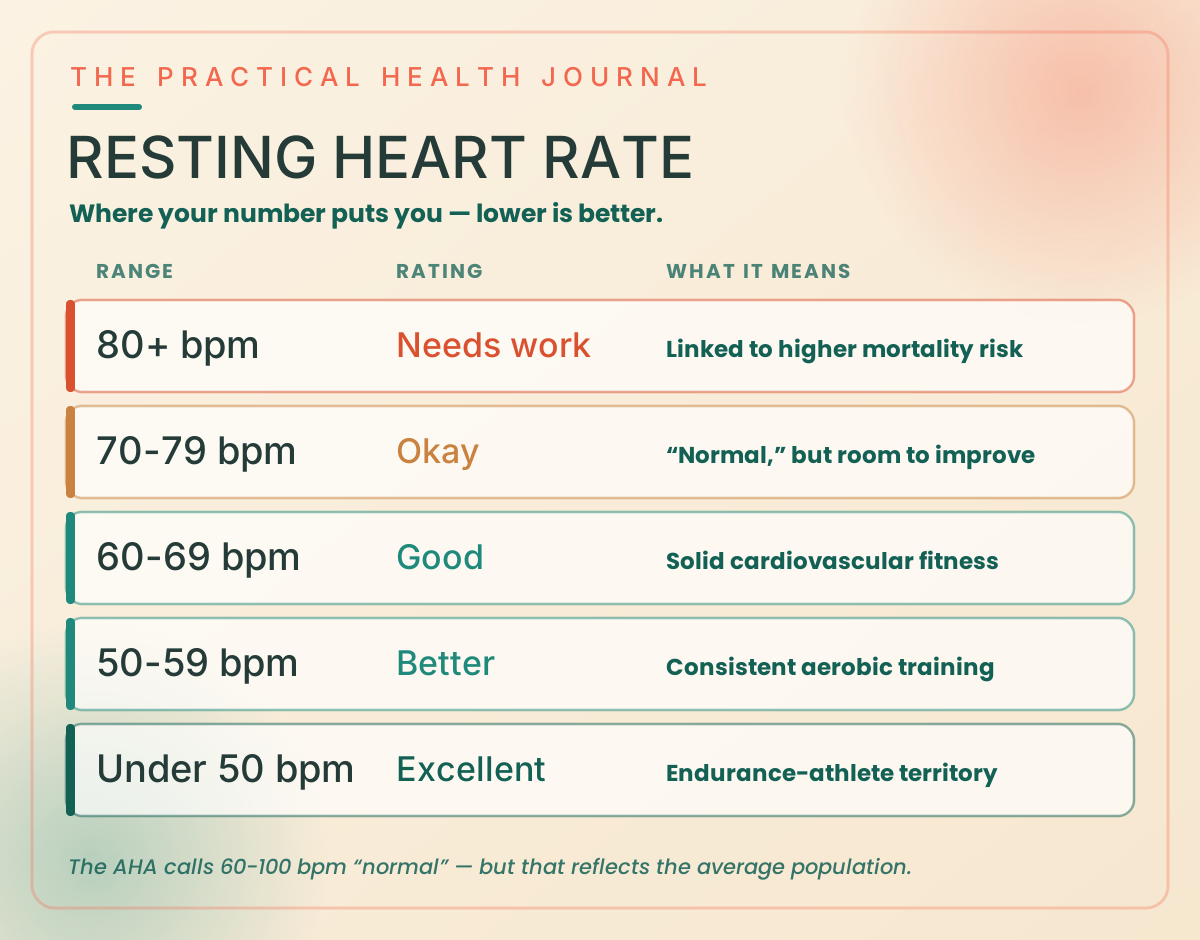
How to lower it: consistent walking, strength training, and 2-3 Zone 2 cardio sessions a week of 20-30 minutes (jogging, elliptical, rowing — anything you can hold a conversation through).
My own RHR was 55-56 a couple years ago, before I started running three times a week. That’s pretty good for 42. Today it’s 43 bpm, which is elite for my age. That gives me a lot of confidence — not just in my performance, but in my longevity.
Two things worth knowing: certain medications (beta blockers especially) lower resting heart rate independent of fitness, so the number means something different if you’re on one. And a low RHR paired with dizziness, fatigue, or fainting isn’t a fitness win — that’s worth a call to your doctor.
5️⃣ Your Blood Markers
Finally, a handful of blood markers that tell you how you’re doing internally — the stuff you can’t see in the mirror.
There are plenty of markers worth knowing, but these five tell you an awful lot about your health and longevity.
I track all of my blood work through Function Health.
The ranges below are general reference ranges from published guidelines. They’re meant to help you understand what you’re looking at — not to replace your doctor’s read on your individual results.
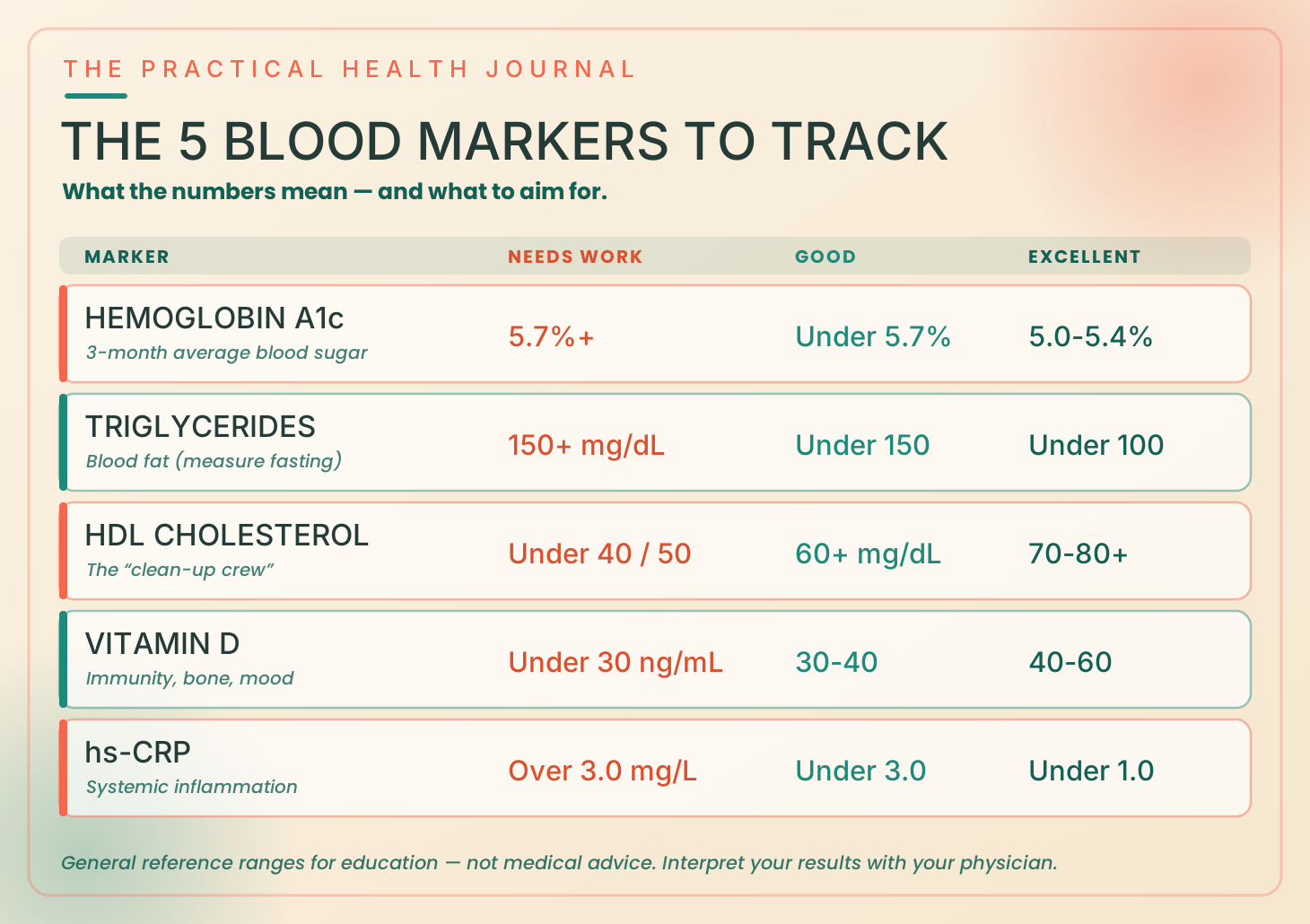
Hemoglobin A1c
Your three-month average blood sugar. It tells you how well your body is handling glucose, and it’s the earliest warning system you have for metabolic trouble.
Triglycerides
A fat in your blood that reflects how well your nutrition and activity are matched up. If you're overconsuming carbohydrates, all the extra sugar is sent to the liver and converted to triglycerides. So elevated triglycerides is usually another indicator of excessive sugar or carbohydrate intake and blood sugar regulation issues. It's often the smoke that indicates a fire.
Mine run around 55. Worth noting these should be measured fasting — a recent meal can skew the number significantly.
Good A1c and good triglycerides together are a strong signal that you’re metabolically healthy and your diet is well matched to your activity.
HDL Cholesterol
The protective cholesterol — the clean-up crew in your bloodstream that helps minimize plaque buildup and damage to your blood vessels.
Vitamin D (25-hydroxy)
Involved in immune function, bone health, mood, and more. Deficiency is extremely common — especially here in the Midwest from about October through April.
hs-CRP (C-Reactive Protein)
A measure of systemic inflammation in your body, and a well-established cardiovascular risk marker.
The Bottom Line
None of these numbers are the goal. They’re the feedback.
Walk your steps. Lift your weights. Get your Zone 2 in. Eat enough protein and stay in a healthy weight range. Do those things consistently, and every number on this list tends to move in the right direction on its own.
But you have to measure them to know. 💪🏻
This article is for educational purposes only and does not constitute medical advice. Reference ranges vary between labs and individuals, and the information here should not be used to diagnose or treat any condition. Always consult a licensed physician about your own results — and never start, stop, or change a medication based on anything you read here.
Podcast Episode 🎙️
Let's Talk About Boundaries
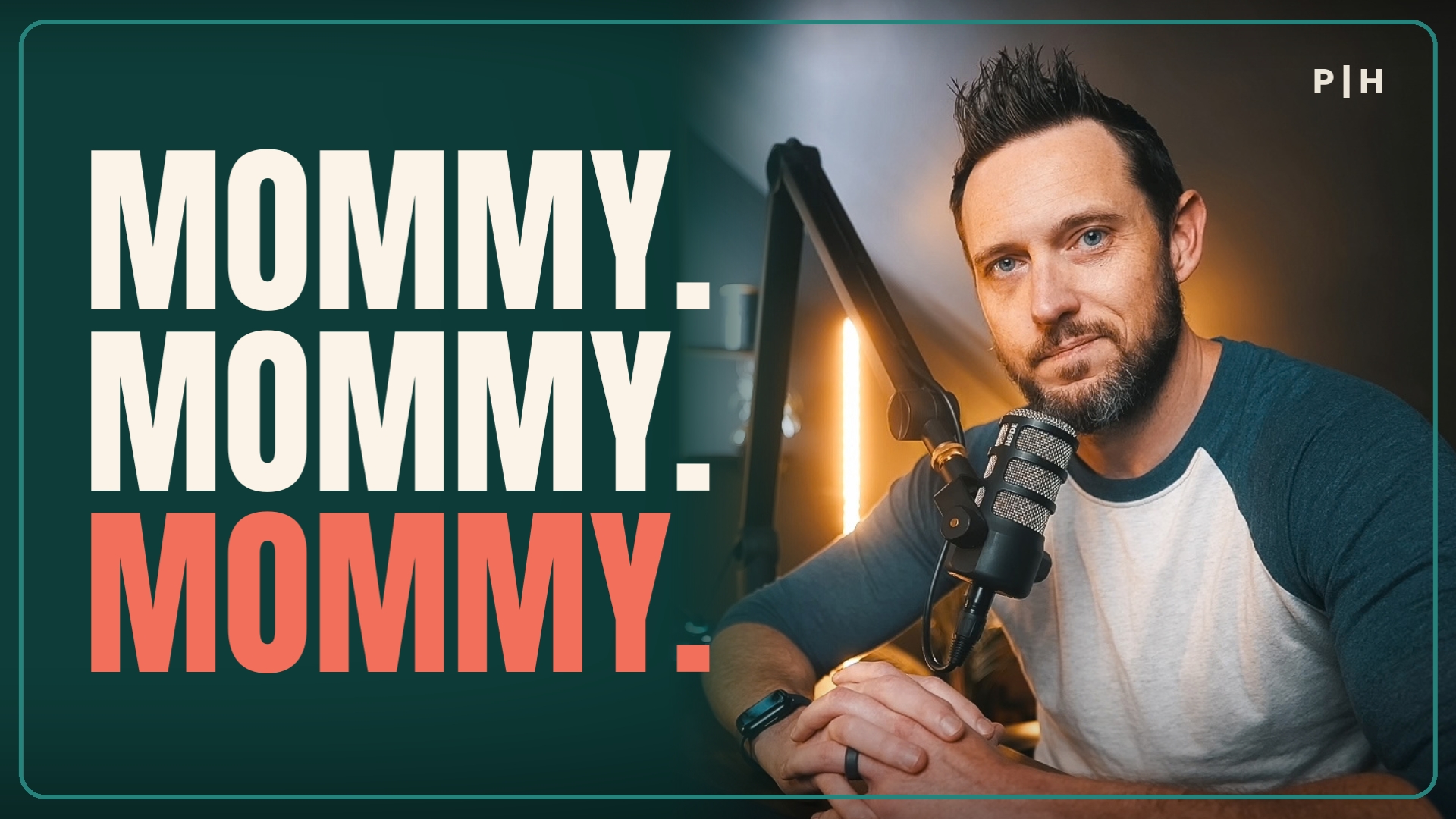
Healthy boundaries...a hot topic and also something that are 100% essential to living a healthy and fit life where you feel loved, respected, and balanced.
In this episode I talk about what healthy boundaries look like and how to re-train others in your life with new healthy boundaries so you have the time and space to thrive.
Listen on YouTube, Spotify, or Apple Podcasts.
Client Win Of The Week
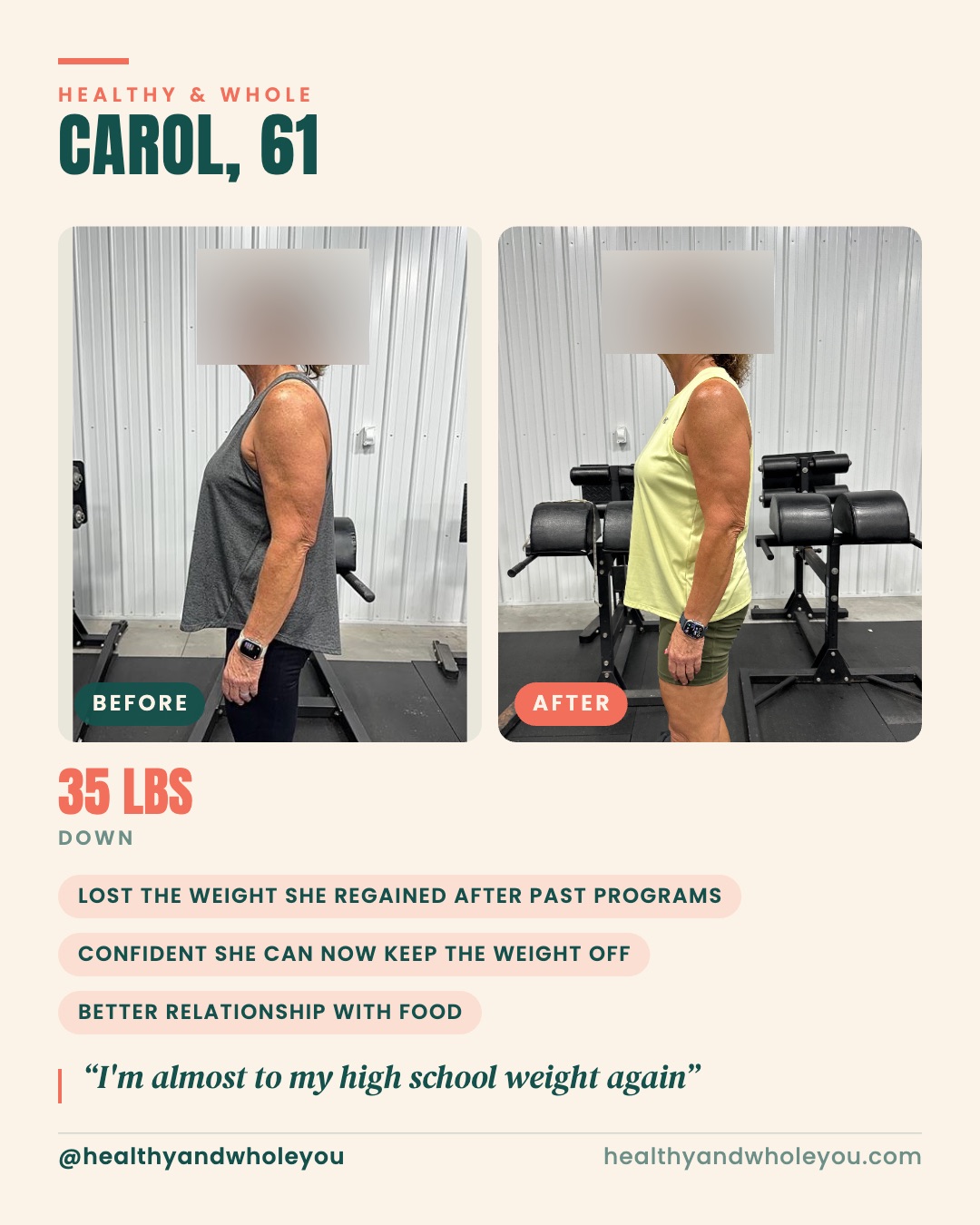
“I’m close to the weight I was in high school!”
When Carol came to me, she was frustrated. She’d lost weight with another program — then gained it all back the moment she stopped.
It was hard to watch it return knowing how hard she’d worked. But she wasn’t willing to accept defeat. She wanted to figure out how to lose it and keep it off, so she joined Healthy & Whole.
Now she’s lost all of it back and more — she’s almost at her high school weight. 💪🏻
What made it different this time:
🏆 She learned to modify recipes she loves to boost the protein, without giving up the food
🏆 She learned to eat what she wants in moderation and balance her calories across the day, even after a splurge
🏆 When the hangries hit, she reaches for higher protein to crush the hunger
🏆 She learned to spot and fix the patterns holding her back — like grocery shopping on an empty stomach
Her biggest source of pride? Staying committed to herself through the whole thing and never quitting in the moments it felt hard.
This time she’s confident she can keep it off — and she has a much better relationship with food.
Carol is proof you can lose the weight and build the skills to keep it, even through menopause and a full-time job. 🏆
So proud of you, Carol. 💪🏻
Ready to start your journey?
Here's how I can help...
If you're feeling overwhelmed and frustrated with your body and health, I know how you feel. Apply for coaching here with Healthy & Whole, I'll work with you to find the perfect support level for you in our program that fits your needs and your budget. We have options starting as low as $47 per month 💪🏻
Disclaimer: This email is provided for educational and informational purposes only and does not constitute providing medical advice or professional services. The information provided should not be used for diagnosing or treating a health problem or disease, and those seeking personal medical advice should consult with a licensed physician.